
Technical · JUL 2026
Kouloura: Why Santorini Vines Grow in Baskets
The system woven by the wind that lets vines survive a rainless island — and what it does to the fruit.
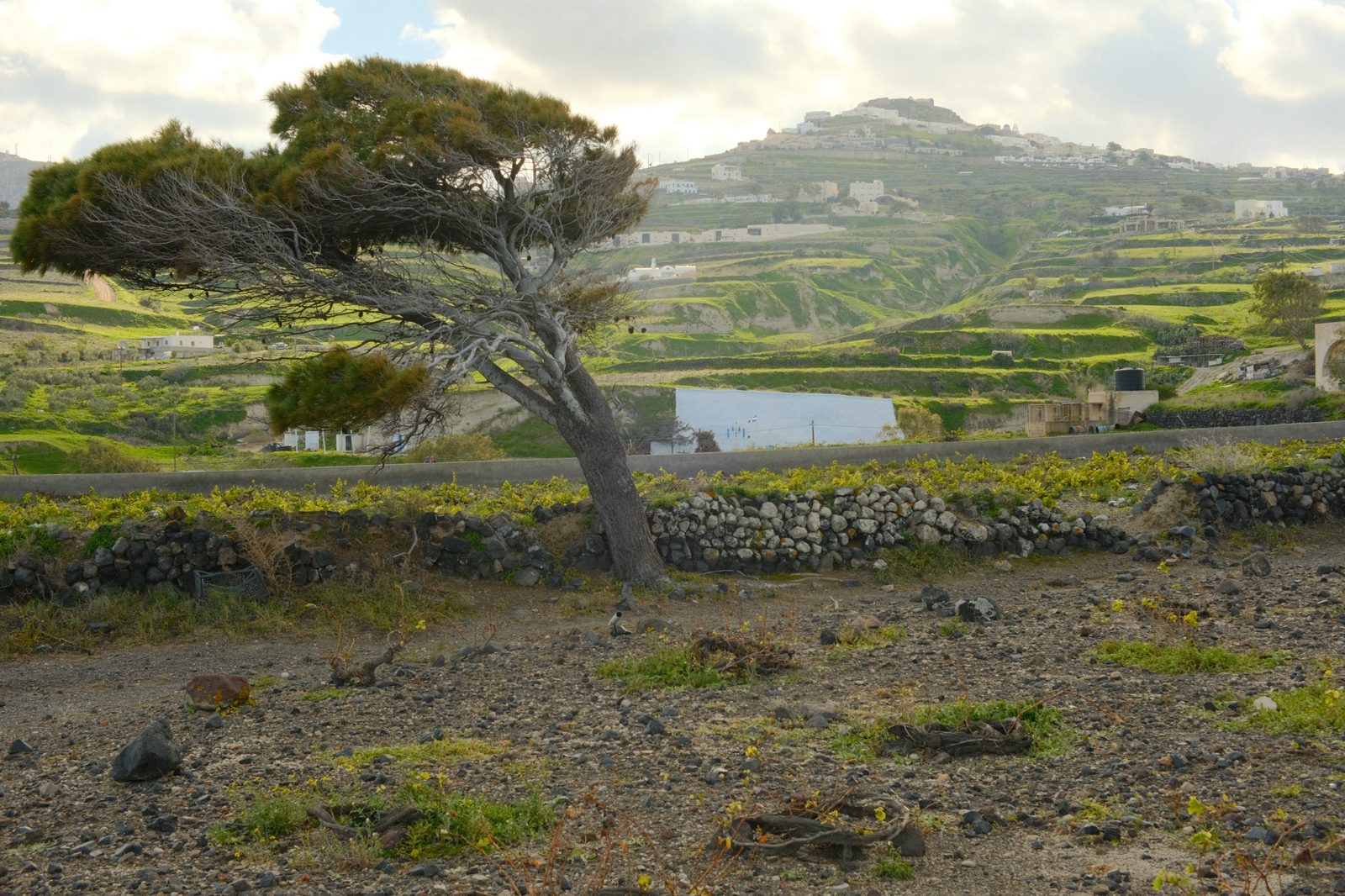
Santorini is famous for its breathtaking sunsets, whitewashed cliffs, and deep blue caldera. But for a grapevine, the island is less of a paradise and more of a brutal endurance test. There is virtually no rain during the growing season. The summer sun is blindingly intense. And then there is the Meltemi, a fierce and relentless wind that howls across the Aegean Sea. It is strong enough to snap upright trellised vines like twigs and blast grapes right off their stems.
To survive this hostility, the grape growers of Santorini had to get creative. They abandoned the standard upright rows of trellised vines seen in places like Bordeaux or Napa. Instead, they took their vines to the ground and wove them into baskets.
This ancient training system requires heavy labor and is called the kouloura (Greek for “ring” or “coil”). It is the only reason Santorini produces some of the most profound white wines in the world today.
Defying the Elements
The kouloura is an ingenious solution to three massive environmental challenges.
1. Deflecting the Meltemi Wind
If you try to grow a vine upright on a wire in Santorini, the fast Meltemi winds will destroy the canopy and strip the vine of its flowers before fruit can even form. By training the vine into a low ring that hugs the ground, the wind simply passes over the top. The aerodynamic shape prevents the wood from breaking and keeps the delicate buds safe.
2. Shading the Fruit
In a traditional vineyard, the leaves of the vine provide a canopy that shelters the grapes from sunburn. In the kouloura system, the grapes actually grow inside the center of the woven basket. The walls of the basket, made of the canes and foliage of the vine, create a miniature canopy. This shields the grapes from the blistering Mediterranean sun, allowing them to ripen slowly and preserve their precious acidity.
3. Capturing Invisible Water
Santorini receives almost zero rainfall from May to September. However, the temperature difference between the warm land and the cooler sea creates a thick and humid sea mist that rolls over the island at night. The dense woven structure of the kouloura acts like a net, catching this morning dew. The moisture drips down into the island aspa, a porous volcanic soil full of ash, which absorbs the water like a sponge and feeds it directly to the deep roots.
A Labor of Patience
You cannot build a kouloura overnight. It is a continuous and living craft.
Each winter during pruning, the viticulturist takes the new pliable canes of the vine and weaves them into the existing circle, slowly building the walls of the basket higher and thicker over the years. Some of these living baskets are woven from vines that are older than seventy years.
Eventually, after several decades, the basket becomes too thick and nutrients struggle to reach the extremities. When this happens, the grower will cut the basket off at the trunk. Thanks to the sandy soils of the island which are free of phylloxera, the roots remain intact, and a new shoot will emerge to begin a brand new basket. Because of this regeneration, the root systems of some Santorini vines are estimated to be over four hundred years old.
What It Does to the Wine
The kouloura system demands an incredibly high amount of manual labor. Tractors and mechanical harvesters are useless here; everything must be done by hand on your hands and knees. It also results in naturally microscopic yields. A vine expends so much energy just surviving that it produces very few clusters of grapes.
But for wine lovers, the payoff is immense.
The flagship grape of the island, Assyrtiko, thrives in this system. Because the yields are so low, the energy of the vine is concentrated into the few grapes it does produce. The resulting wines are intensely flavored, incredibly dry, and structurally massive. They boast a searing and electric acidity alongside a distinct and smoky salinity that tastes like the sea salt carried by the Meltemi wind.
The kouloura is not just a farming technique; it is a physical manifestation of terroir. It is proof that sometimes the harshest environments produce the most beautiful results when met with human ingenuity.